
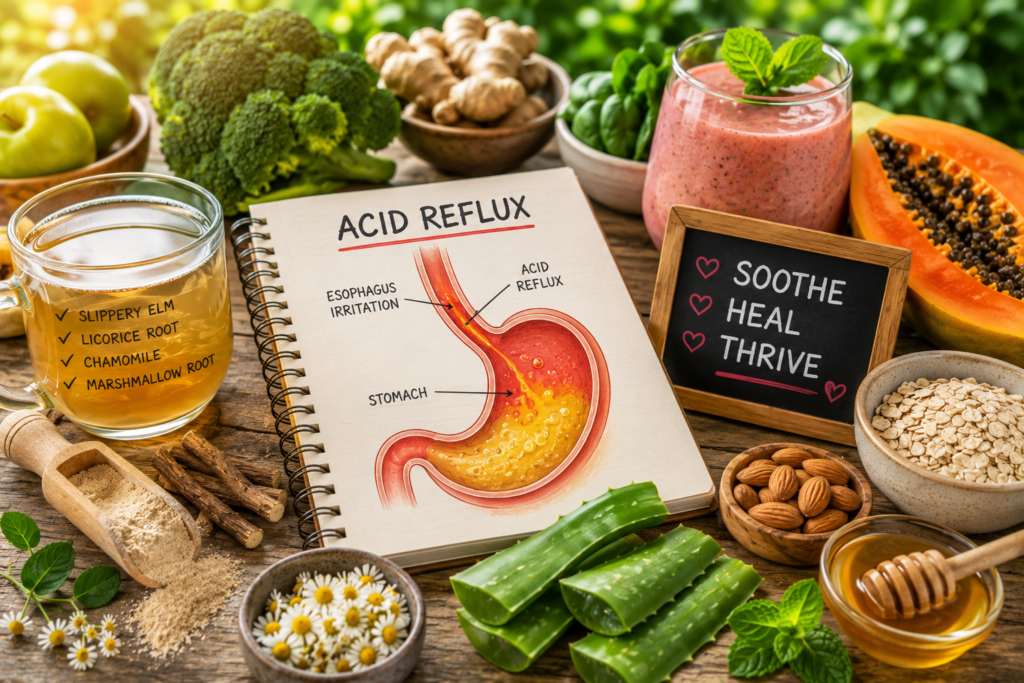
Acid Reflux: What If It’s Not Too Much Acid… But Too Little?
For years, we’ve been told the same story:
Acid reflux = too much stomach acid.
It sounds logical, right? Burning in the chest must mean there’s excess acid causing trouble. But what if the real issue isn’t too much…but actually too little?
Let’s take a closer look at what may really be going on inside your body.
Your Stomach Has a Gatekeeper
At the entrance of your stomach sits a small but powerful muscle called the lower esophageal sphincter (LES).
Think of it as a gate:
- It opens to let food pass into your stomach
- Then it closes tightly to keep everything where it belongs
When this gate works properly, stomach contents stay in the stomach, simple.
So Why Does Acid Come Back Up?
Here’s where things get interesting.
Your stomach relies on strong acid levels to:
- Break down food efficiently
- Trigger proper digestion
- Signal the LES to close firmly
When your stomach produces enough acid, everything flows smoothly. But when acid levels are too low, digestion slows down.
Low Acid, Big Problems
Without sufficient acid:
- Food sits longer in the stomach
- It begins to ferment
- Gas builds up
- Pressure increases
And at the same time…The LES doesn’t get a strong signal to fully close. Instead of being tight and secure, it becomes slightly relaxed, leaving a small opening.
The Perfect Setup for Reflux
Now you have a situation where:
- There’s pressure pushing upward
- The “gate” isn’t fully closed
- Even a small amount of acid is present
So what happens? That small amount of acid is pushed up into the esophagus.
Why It Burns So Much
Here’s the surprising part:
Your stomach is designed to handle acid. Your esophagus is not.
So even a tiny amount of acid in the wrong place can feel intense, causing that familiar burning sensation known as acid reflux.
A Natural Approach to Prevention and Healing
If low stomach acid may be part of the problem, then the goal isn’t to suppress acid with antacid. It’s to gently support your body in making more of it.
And one of the simplest ways to do that?
Bring in naturally acidic, fermented foods.
Why Fermented Foods Can Help
Fermented foods like:
- Sauerkraut
- Kimchi
- Kefir
- Homemade yogurt
- Kombucha
- Kvass
…are naturally rich in organic acids and beneficial bacteria.
They have that slightly sour, tangy taste for a reason, they’re already partially broken down through fermentation.
How This Supports Stomach Acid (In Simple Terms)
Think of your stomach like a fire that needs a spark. When you eat fermented foods, their natural acidity acts like a gentle signal to your body:
“Hey, digestion is starting, time to turn the acid on.”
This can help:
- Stimulate your stomach to produce more hydrochloric acid (HCl)
- Improve breakdown of proteins
- Support smoother digestion overall
An Easy Way to Start
You don’t need large amounts.
In fact, small is better:
- 1tbsp of Apple Cider Vinegar in 1 glass of water before meals
- A spoonful of sauerkraut with meals
- A ¼ cup of kefir water with meals
- A small serving of fermented vegetables
Taken just before or with meals, this can gently wake up your digestive system.
Final Thoughts
Acid reflux isn’t always about excess.
In many cases, it may be a sign of inefficient digestion where low stomach acid leads to poor breakdown of food, increased pressure, and a valve that doesn’t fully close.
Understanding this perspective can completely change the way you approach your symptoms and open the door to more effective, natural solutions.